
Addiction Therapy in New York and New Jersey
You know the behavior is costing you something. You also know there is a reason you keep going back to it. Being told to stop doesn’t explain what to do with everything that comes up when you try.
You may be tired of negotiating with yourself.
You make rules about using, then find reasons to change them.
You look fine to other people and spend a lot of energy keeping it that way.
An urge shows up after conflict, loneliness, or shame.
You stop for a while, but the same pattern comes back.
You want help and worry about what you will be asked to give up.
You judge yourself afterward and end up needing relief again.
Understanding the pattern is part of changing it.
I work with adults navigating substance use and compulsive coping. We look at the behavior itself, its consequences, and what tends to happen before and after it. My background includes addiction training through the CASAC-T credential.
The goal is not to explain away harm. It is to understand enough about the pattern to make useful changes. We can discuss your goals, situations that make change harder, and what additional support may be needed.
When coping and trauma become connected
For some people, using offers distance from feelings, memories, or relationship stress. For others, different factors are involved. We do not need to assume that every addiction comes from trauma.
When trauma or attachment experiences are part of your story, we can explore them alongside current coping. We can also pay attention to the part of you that wants change and the part that worries about losing something it relies on.
Explore how IFS and parts work can help us talk about conflicting reactions to change.
If repeated trauma is part of your experience, read about complex trauma therapy.
What we can pay attention to in therapy.
Look closely at the loop
What happens before an urge? What relief does the behavior provide? What happens afterward?
Discuss realistic changes
We consider your goals, triggers, boundaries, and other supports rather than relying on willpower alone.
Keep reviewing what helps
We pay attention to setbacks, progress, and whether outpatient therapy is the right level of support.
My approach is informed by IFS training, attachment-based work, and trauma-informed care. We discuss what fits your needs rather than follow a fixed sequence.
What happens just before you reach for it?
Maybe an argument ends and you feel alone. Maybe the day finally gets quiet and you can’t settle. We can look at those moments without turning them into evidence that you are weak or that nothing will change.
Schedule a Free ConsultationYou don’t have to find the perfect way to explain it.
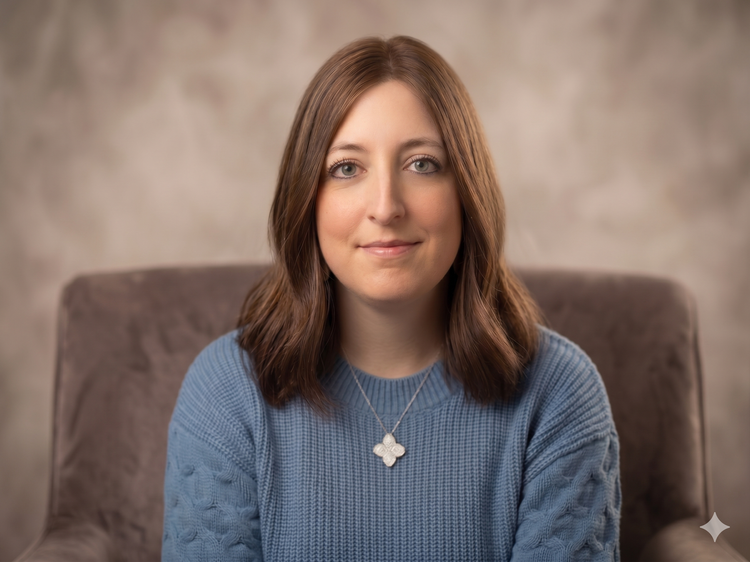
I’m Sury Klein, LMSW in New York, LSW in New Jersey, and CASAC-T. I work with adults navigating trauma, addiction, and relationship patterns, under LCSW supervision. My background includes Internal Family Systems training.
I ask questions. We can look at what happened this week, notice what came up between us, and discuss when something in therapy is not helping. Learn more about me and my approach.
Telehealth therapy in New York and New Jersey.
Sessions are currently online in both states. We can discuss availability, privacy for video sessions, and whether this practice fits your needs during a consultation.
Individual sessions
$200 for 50 minutes. Private pay; I do not accept insurance.
Free consultation
A 15-minute conversation to ask questions and discuss fit. No obligation to begin.
Finding the right support
If we are not the right fit, I can help connect you with another therapist.
Frequently asked questions
Do I have to know exactly what my goal is?
No. We can discuss what concerns you about the behavior, what you want to change, and whether this practice is appropriate for your needs.
Do you offer detox or medical addiction treatment?
No. This is outpatient talk therapy, not medical withdrawal management or detox. If you may need medical care or a higher level of treatment, that needs to be considered in planning support.
Can we talk about addiction and trauma together?
Yes, when both are relevant. We can explore how they relate without assuming one explanation fits everyone.
What if I have tried to change before?
We can look at what helped, what became difficult, and what was missing. Past attempts give us information for discussing your next steps.
Do you offer telehealth in New York and New Jersey?
Yes. I currently offer telehealth for adults in New York and New Jersey. I am an LMSW in New York and an LSW in New Jersey, and practice under LCSW supervision.
What does individual therapy cost, and do you accept insurance?
Individual sessions are $200 for 50 minutes. I do not accept insurance. A free 15-minute consultation gives us a chance to discuss fit, with no obligation to begin therapy.
Explore related therapy services
These concerns can overlap. You do not need to choose the right category before reaching out.
Read my therapy articles or explore resources for reflection between sessions.
Bring the question you keep coming back to.
You can tell me a little about what is bringing you in, ask about working together, and see how the conversation feels.
Schedule a Free Consultation